



Reserve Bank of India keeps repo rate unchanged; pegs GVA at 8.1% in FY19
The analysts were expecting RBI Governor Urjit Patel and Monetary Policy Committee (MPC) to maintain status-quo on interest rates as the main focus will be towards liquidity surplus.


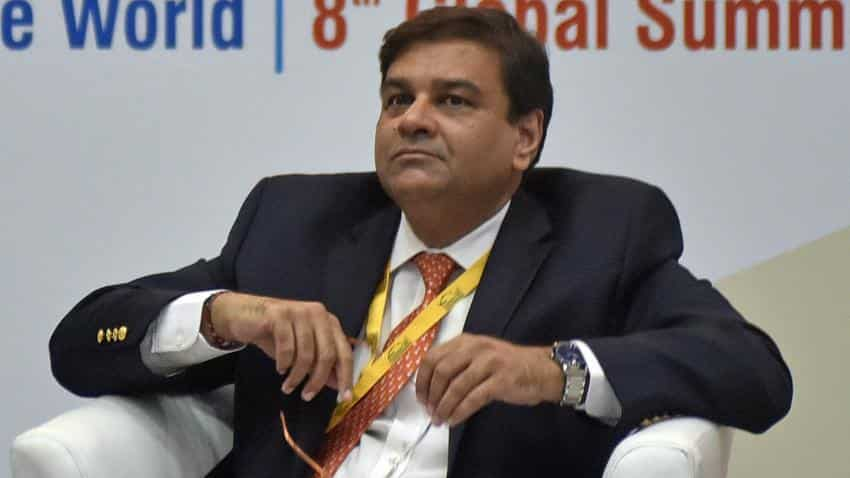
The Reserve Bank of India (RBI) in its first bi-monthly policy for the financial year 2017-18 on Thursday decided to keep the repo rate unchanged at 6.25%. The decision was taken unanimously by the Monetary Policy Committee (MPC) headed by RBI Governor Urjit Patel.
However, in a surprise move, RBI raised the reverse repo rate to 6% from 5.75% tightening monetary policy unexpetedly.
The marginal standing facility was cut by 25 basis points to 6.5% from 6.75%.
Reverse repo rate is the rate at which RBI borrows money from banks.
The central bank has forecast Gross Value Added (GVA) growth at 7.4% in the financial year 2017-18 and 8.1% in FY19.
Moreover, the RBI Economists see inflation at 5% in the second half of FY18.
The analysts were expecting RBI Governor Urjit Patel and Monetary Policy Committee (MPC) to maintain status-quo on interest rates as the main focus will be towards liquidity surplus.
A poll was carried out by Zee Business revealed that 80% of the analysts believed RBI to not cut interest rates while the rest saw 0.25% reduction.
ALSO READ: 9 things to watch out for before RBI's bi-monthly monetary policy
In last policy of FY17, six-member monetary policy committee (MPC) changed credit policy stance to neutral from accommodative. The central bank on February 8, kept the repo rate unchanged at 6.25%.
ALSO READ: RBI Monetary Policy: Status-quo likely but outlook will be key
Madhavi Arora, Suvodeep Rakshit and Upasna Bhardwaj analysts at Kotak Institutional Equities said, “Despite a lower FY2018 inflation trajectory than RBI, we do not pencil in any rate cuts owing to shift in RBI’s stance to neutral, premised on (1) possible second-round impact of sticky-to-rising core inflation, (2) tighter global financial conditions, (3) FX volatility and (4) higher commodity prices."
Get Latest Business News, Stock Market Updates and Videos; Check your tax outgo through Income Tax Calculator and save money through our Personal Finance coverage. Check Business Breaking News Live on Zee Business Twitter and Facebook. Subscribe on YouTube.





02:42 PM IST
 ESAF SFB gets RBI nod for re-appointment of K Paul Thomas as MD & CEO
 MobiKwik gains market share, becomes largest wallet player
 RBI cancels the license of this bank; what will happen to depositors' money? Find out
 RBI rolls out new draft regulations to ease export & import deals
 India records 0.6% current account surplus in March quarter: RBI