



After Fitch, Moody's places PNB ratings under review for downgrade
The primary driver for today's rating action is the risk of weakening of the bank's standalone credit profile, as a result of the discovery of a number of fraudulent transactions


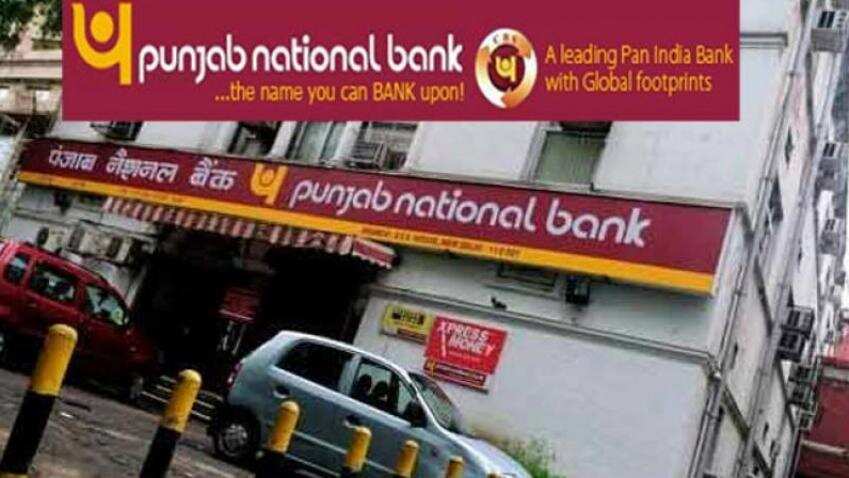
After Fitch, Moody's Investors Service today placed under review for downgrade Punjab National Bank's (PNB) local and foreign currency deposit rating of Baa3/P-3 and foreign currency issuer rating Baa3.
Moody's has also placed the bank's Baseline Credit Assessment (BCA) and adjusted BCA of ba3 and the Counterparty Risk Assessment (CRA) of Baa3(cr)/P-3(cr) under review for downgrade.
Ratings Rationale
The primary driver for today's rating action is the risk of weakening of the bank's standalone credit profile, as a result of the discovery of a number of fraudulent transactions. On February 14, 2018, PNB announced to the Indian stock exchange that the bank had discovered some fraudulent and unauthorised transactions amounting to Rs113.9 billion ($1.8 billion).
The fraudulent transactions represent a contingent liability and the financial impact will be determined by the relevant law in India.
Nevertheless, Moody's expects that PNB will need to provide for at least a substantial portion of the exposure. As a result, the bank's profitability is likely to come under pressure, although the actual impact will depend on the timing and quantum of provisions that need to be made, as well as any prospects for recovery.
The fraudulent transactions represent about 230 basis points of the bank's risk-weighted assets as of December 31, 2017. As such, PNB's capital position would deteriorate markedly, and fall below minimum regulatory requirements, if the bank is required to provide for the entire exposure.
Consequently, PNB may need to raise capital externally — mainly from the government — to comply with the minimum Basel III capital requirement of an 8% common equity tier 1 (CET1) ratio by March 31, 2019.
The bank reported a CET1 ratio of 8.05% in the quarter ended December 31, 2017. Since the announcement of the fraudulent exposure, PNB's share price has fallen by about 30% as of the end of February 19, 2018, limiting the bank's access to the equity capital markets.
The discovery of the fraudulent transactions also highlights the weak operational controls and corporate governance at the bank.
Also Read: Fitch places PNB under negative watch; stock slips for 5th day in row
The fraudulent letters of undertaking for raising buyers credit had been transmitted via the SWIFT channels without obtaining the approval of the competent authority or necessary legal documentation, and were not entered into the bank's core banking system.
The review for downgrade will focus on: (1) the timing and quantum of the financial impact of the fraudulent transactions, (2) any management actions taken to improve the capitalisation profile of the bank, and (3) any punitive actions taken by the regulator on the bank.
Moody's assumes a very high probability of government support for PNB in times of need, resulting in a three-notch uplift to its deposit and issuer ratings from its BCA. In the review for downgrade, Moody's will also assess government support for the bank's deposits and senior unsecured debt.
Factors that can upgrade rating
Given the review for downgrade, Moody's is unlikely to upgrade PNB's ratings over the next 12-18 months.
Nevertheless, Moody's could affirm the ratings if the financial impact of the fraudulent transactions is much smaller than what Moody's anticipates in this rating action, and/or if the bank manages to strengthen its capital position to a level above the minimum regulatory requirements — including the capital conservation buffer — under Basel III standards, and/or the bank returns to profitability on a sustainable basis.
Factors that can downgrade rating
PNB's BCA and ratings will be downgraded if the contingent liabilities from the fraudulent transaction worsen its capital position. Any indication that government support has diminished beyond what Moody's anticipates in this rating action could also lead to a ratings downgrade.
The principal methodology used in these ratings was published in September 2017.
Ratings agency Fitch also put the bank under review for downgrade. PNB’s Viability Rating of ’bb’ has been put on Rating Watch Negative, following the large fraud reported by the bank.
Get Latest Business News, Stock Market Updates and Videos; Check your tax outgo through Income Tax Calculator and save money through our Personal Finance coverage. Check Business Breaking News Live on Zee Business Twitter and Facebook. Subscribe on YouTube.
RECOMMENDED STORIES





12:27 PM IST
 Fitch raises India's growth estimates to 7.2% for FY25
 Fitch cuts China's ratings outlook on growth risks
 Fitch downgrades outlook on China to negative on economic growth risks
 Indian banks' profitability to remain resilient despite margin pressure: Fitch
 Fitch raises India FY25 GDP forecast to 7% from 6.5%