



Water found on potentially habitable planet
Given the high level of activity of its red dwarf star, K2-18b may be more hostile to life as we know it than Earth, as it is likely to be exposed to more high-energy radiation.


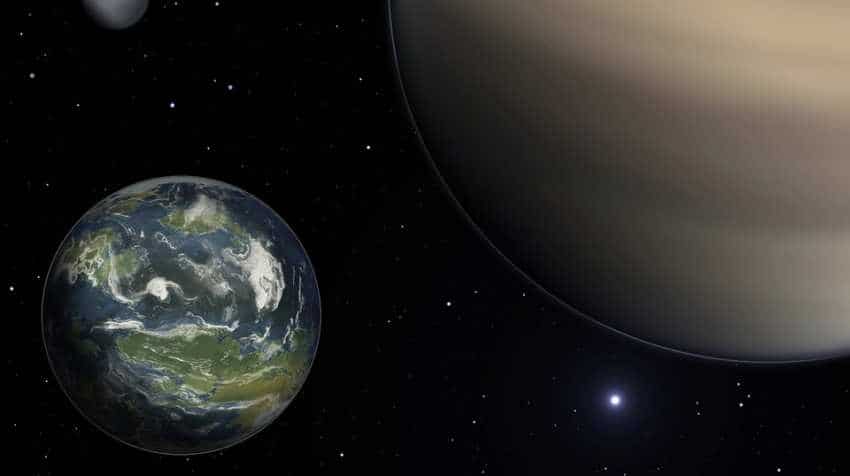
NASA`s Hubble Space Telescope has detected water vapor signatures in the atmosphere of a distant planet called K2-18b, Representational image, Source: Pixabay
Written By: IANS
Updated: Thu, Sep 12, 2019
12:40 PM IST
12:40 PM IST
Washington, IANS
RELATED NEWS
 NASA astronauts lose tool bag during first spacewalk
 NASA postpones probe to explore metal-rich asteroid to October 12
 NASA spacecraft spots Moon crater likely caused by Russia's Luna 25
 Chandrayaan-3 also a testament to global linkages nurtured by ISRO
 New crew for the space station launches with 4 astronauts from 4 countries